Practise this topic in CMCG Online Academy
Short lessons and corrected exercises on Moroccan accounting. The introduction (10 lessons) is free: your first name and city are enough.
The month-end accounting close turns a collection of entries into information that can be understood and reviewed. During the month, invoices arrive, payments clear, documents remain outstanding and some transactions are entered later than others. Closing the month means checking that the file gives a coherent account of the period before a trial balance, ledger or internal report is relied upon.
A close is not simply a decision to stop entering transactions on a particular date. Important operations should be present, account balances should be explainable, and unresolved issues should be clearly identified. The method below works for a learning exercise and for preparing a file for review. In practice, it must always be adapted to the organisation's procedures and the instructions of the person responsible for the accounts.
Build on this topic with CMCG Online Academy, with accounting lessons, practice and assessments, plus French courses.
1. Define the period and scope
Start by writing down exactly what you are closing: the month, the journals included, the bank accounts, cash and any supporting files. A poorly defined period can lead to omissions or duplicate entries. Confirm the latest period already reviewed so that you do not alter approved entries without authorisation.
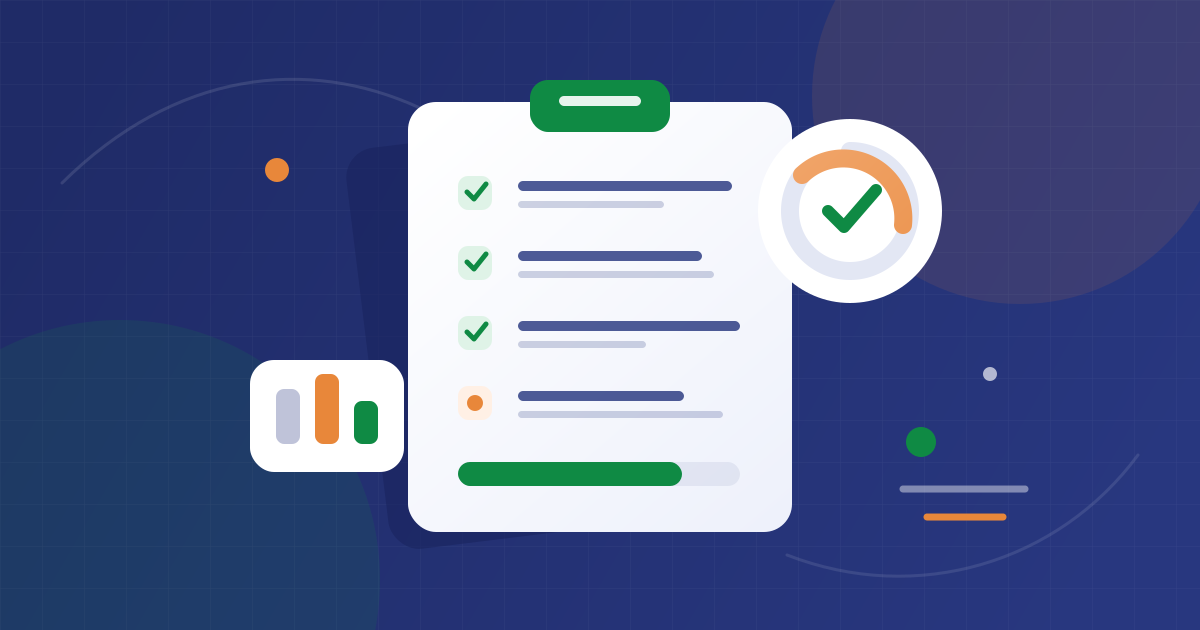
Prepare a working list with a status for each control: not started, in progress, complete or awaiting information. Add the person responsible and the missing document where relevant. A useful checklist records more than completed work; it also makes obstacles visible.
2. Gather and organise supporting documents
Bring together purchase and sales invoices, credit notes, bank statements, cash documents and payment evidence. Separate items already processed from those awaiting analysis. An invoice with an unclear reference should not be entered by guesswork merely to empty the pending folder.
For each document, check the date, counterparty, nature of the transaction, amounts and payment method. Put incomplete items on an identifiable follow-up list. The guide to organising accounting documents before entry shows how to create a reliable flow without mixing received, reviewed and posted documents.
3. Check that the journals are complete
Review the purchase, sales, bank, cash and general journals used in the file. Look for breaks in document sequences, dates outside the period, vague descriptions and incomplete entries. Where appropriate, compare the sequence of source documents with the entries posted.
A journal is not complete simply because it contains many lines. Every entry should connect to a real event and evidence that can be retrieved. For a supplier invoice, the date, nature of the purchase, supplier account and payment information should form a consistent story. Analysis comes before data entry.
4. Review customer and supplier accounts
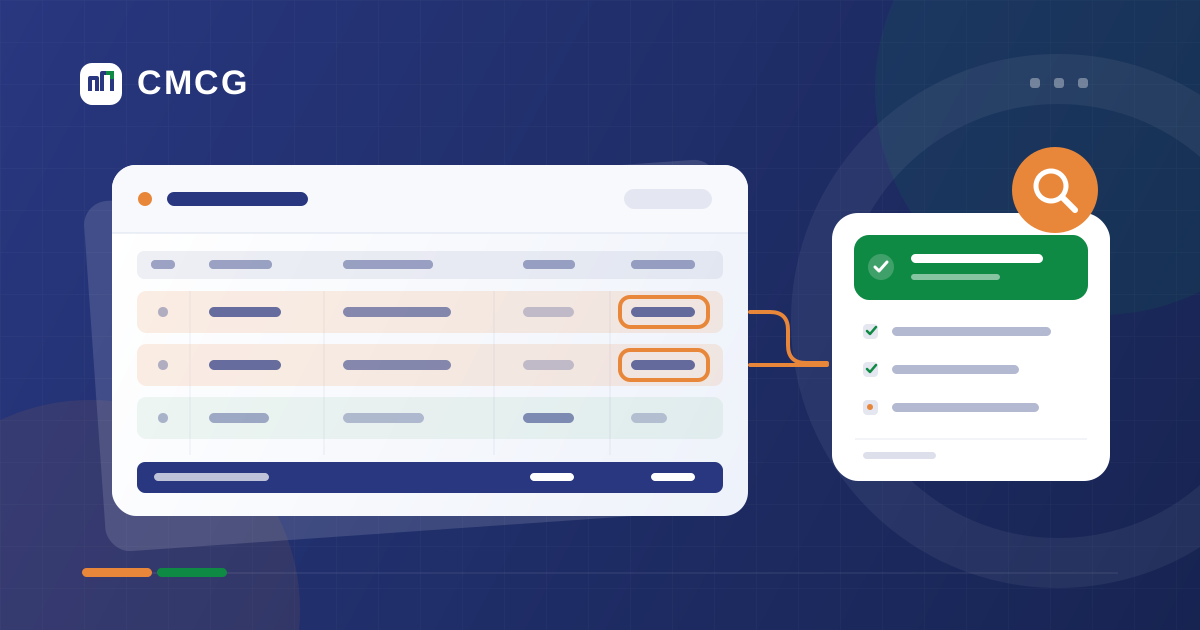
Examine the subsidiary accounts for unpaid invoices, unallocated payments, unusual credit or debit balances and old lines without explanations. Account matching helps link an invoice to its payment, but it must not hide a difference. When amounts do not match, investigate a credit note, partial payment, posting error or missing document.
Sort issues by the next action: request evidence, correct an allocation, check an entry or refer the question to the responsible person. An old balance is not automatically wrong, but its age deserves an explanation. The guide to matching customer and supplier accounts provides a focused method for this control.
5. Reconcile every bank account
For each bank account, compare the ledger with the statement for the same period. Match lines using the amount, date, reference and beneficiary. Then isolate outstanding transactions, unrecorded charges, unidentified transfers and possible duplicates.
Never create a general difference entry simply to make the balances agree. Every difference needs a cause. The step-by-step bank reconciliation guide explains how to document those differences and bring forward relevant items from the previous month.
6. Review cash and temporary accounts
Compare the accounting cash balance with the count or record available under the organisation's process. An implausible cash balance, unsupported expense or unusual series of movements should be reported rather than quietly offset.
Review suspense accounts and provisional entries as well. For every amount, note its origin, the missing information and the next action. A suspense account is a temporary tool while a transaction is identified; it should not become a storage area for difficult items that nobody owns.
7. Perform consistency checks
Produce a trial balance and look for signals that require investigation: an account with an unexpected sign, an unusually old counterparty balance, a movement without a useful description or a change that is difficult to explain. A change is not an error by itself. It is a question that should be understood and documented.
Apply straightforward checks too: total debits equal total credits, dates fall within the period, obvious duplicates are absent, and journal totals flow logically to the accounts. Comparisons with the previous month should guide your attention, never pressure you into reproducing the same numbers.
8. Document corrections and open points
Every correction should leave an understandable trail: the error found, the evidence supporting the change, the person who approved it and the date of action. Do not delete an entry in a way that removes the review history required by the software and internal procedure.
Maintain a separate list of open points. “To check” is not specific enough. Write “identify the transfer dated 28 with the relevant department” or “supplier credit note requested and not yet received.” A precise sentence allows another person to continue the work without beginning the investigation again.
A good close is not a file with no questions. It is a file where every remaining question is visible, assigned and accompanied by a next action.
9. Assemble the review file
Gather the trial balance, useful ledgers, bank reconciliations, unmatched customer and supplier lists, cash control and open-point tracker. Arrange them in a stable order and use clear names. The reviewer should be able to understand what was checked without reconstructing your entire process.
Before handing over the file, return to your checklist. Were the stated controls actually completed? Were corrections posted in the correct period? Can the supporting documents be found? Are unresolved points explained? Finally, record the preparation and review dates according to the applicable procedure.
Final month-end checklist
- the period and scope are clearly defined;
- documents are collected, organised and separated from pending items;
- journals are reviewed and key entries link to evidence;
- customer and supplier accounts are analysed;
- every bank account is reconciled;
- cash and temporary accounts are explained;
- the trial balance and general consistency checks are complete;
- corrections are documented and open points have owners;
- the review file is complete and readable.
Turn the checklist into a professional skill
Month-end closing combines tasks that learners often meet separately: reviewing an invoice, entering it properly, matching a counterparty account, reconciling a bank and explaining a balance. Working through one continuous file reveals the correct sequence and shows how an early mistake affects later controls.
CMCG's practical accounting training helps learners practise these controls with connected documents, Sage and a clear review method. The aim is not to memorise a list. It is to prepare an understandable file, identify an anomaly and explain the work performed.